Understand the constraints.
Architecture and stack selection start with the product and the trade-offs it can afford.
 ELENA CHIPERI / ABOUTGERMANY
I’m Elena, a software engineer with 10 years of experience. I connect architecture, application development and infrastructure — and bring that foundation to generative AI.
Connect on LinkedIn ↗01 / THE WAY I WORK
Scroll through the layers of my practice.
Architecture and stack selection start with the product and the trade-offs it can afford.
From application code to infrastructure: keep the pieces connected and the system maintainable.
LLM applications, agents and RAG, built on engineering foundations.
Freelance
Sole engineer on a B2B logistics product — designed and built the system end-to-end alongside the client's product team. Acting as de-facto solution architect: from stack selection to production and on-call.
Architecture & technical decisions:
- Selected and justified the full stack to the client: Angular, NestJS, PostgreSQL, Redis, RabbitMQ, Keycloak, Prometheus/Grafana, AWS, Docker - Designed a hybrid microservices architecture from day one with RabbitMQ messaging — high-load components (shipment tracking, notifications) scale independently - Set up dev environment, CI/CD pipelines, and infrastructure from scratch
Trade-offs and rationale: - Hybrid microservices over monolith — isolated high-load services early to avoid costly migration later - RabbitMQ over Kafka — throughput profile didn't justify Kafka's overhead; migration path documented - Keycloak over in-house auth — saved months of work, battle-tested OAuth2/OIDC with SSO out of the box - Redis on hot read paths — cut PostgreSQL load and response times, with explicit invalidation strategy
Built and shipped: - Backend (NestJS): REST APIs, domain logic, PostgreSQL schema and migrations, query/index optimization for read-heavy workloads - Frontend (Angular): operational UIs with data-heavy tables, dashboards, role-based access - Real-time: WebSocket / SSE for live shipment tracking — no polling, no stale data - Centralized auth: Keycloak with OAuth2/OIDC, realms, roles, SSO across services - Observability: Prometheus + Grafana — on-call became signal-driven instead of guesswork - Infrastructure: Docker, CI/CD on Bitbucket Pipelines and Jenkins; unit tests in Jest, e2e in Cypress
Stack: Angular, TypeScript, NestJS, Node.js, PostgreSQL, Redis, RabbitMQ, Keycloak (OAuth2/OIDC, SSO), Prometheus, Grafana, AWS, Docker, Bitbucket Pipelines, Jenkins, Jest, Cypress, REST, WebSocket, SSE
Bitergo GmbH
Frontend engineer on a B2B platform that lets external clients and partners self-serve test environments and integration documentation — reducing onboarding time and support overhead. Day to day, I maintain the Angular UI for the provisioning side of the product (request flows, access management, status tracking) and contribute to the documentation surface that clients use to integrate with us. On the frontend I'm responsible for REST integration, JWT auth and role-based access, error and async state handling, and test coverage in Jest and Cypress. I work closely with backend, product, and support — on feature scope, edge cases, and safe rollout of changes.
NDA
Project: Web platform with a multi-level chat system enabling communication between users, admins, and super-admins. Currently in production. Role: Sole frontend developer — built the entire frontend from scratch to release. Responsibilities: • Frontend architecture and component structure design • Reactive state management with RxJS • Real-time communication via Socket.IO • Role-based access model with dedicated UI per role: — Users and admins — full-featured chat communication — Super-admin — view of all chats grouped by user for monitoring communication quality and tone, plus dedicated chats with admins for feedback and coordination • Unit testing (Karma) and end-to-end testing (Cypress) Team: Solo frontend, separate backend team.
Apriorit
Full-stack development on WordPress and custom solutions built around it. Worked on projects of varying complexity — from landing pages to advanced learning platforms and e-commerce systems.
Responsibilities: - End-to-end WordPress development: from theme architecture to release - Building fully custom themes from scratch (no pre-made templates) - Developing decoupled frontends in JavaScript and React, integrated with WordPress via REST API and GraphQL (WPGraphQL) - Building custom plugins in PHP and React (Gutenberg blocks, admin interfaces, dynamic components) - Extending large existing plugins — additional components, templates, and integrations - System design for membership and LMS platforms — access tiers, content gating, points/rewards logic, progress tracking, course sales flows - Integration architecture — designed integration layers between WordPress and external services: calendars (Google Calendar, iCal), payment gateways, email marketing, CRM - E-commerce: building online stores on WooCommerce, customizing checkout flows, integrating payment gateways - First experience with Angular on a small-scale project — initial exposure to a frontend framework
Tech stack: CMS & Backend: WordPress, PHP, WooCommerce, MySQL
Frontend: JavaScript, TypeScript, React, HTML5, CSS3, SCSS, jQuery, Angular (entry-level) API: REST API, GraphQL (WPGraphQL) Plugins/Systems: WooCommerce, LMS plugins, Membership plugins, Advanced Custom Fields (ACF), Gutenberg Other: Composer, Webpack, Git, Gulp.js
NDA
First full-time engineering role. Built websites of varying complexity — from landing pages to corporate sites and custom client solutions on multiple CMS platforms (WordPress, Joomla, OpenCart, custom in-house CMS). First experience with React.
Stack: HTML5, CSS3, SCSS, JavaScript, jQuery, React, PHP, MySQL, WordPress, Bootstrap, Git
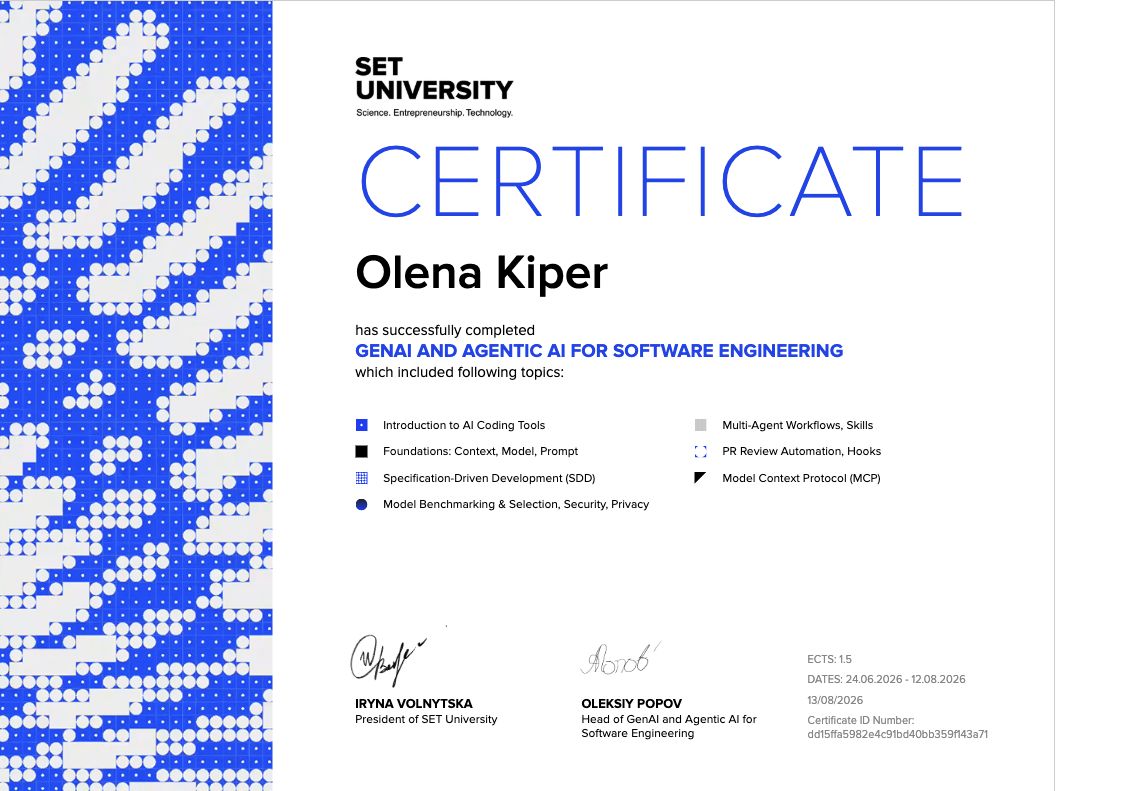
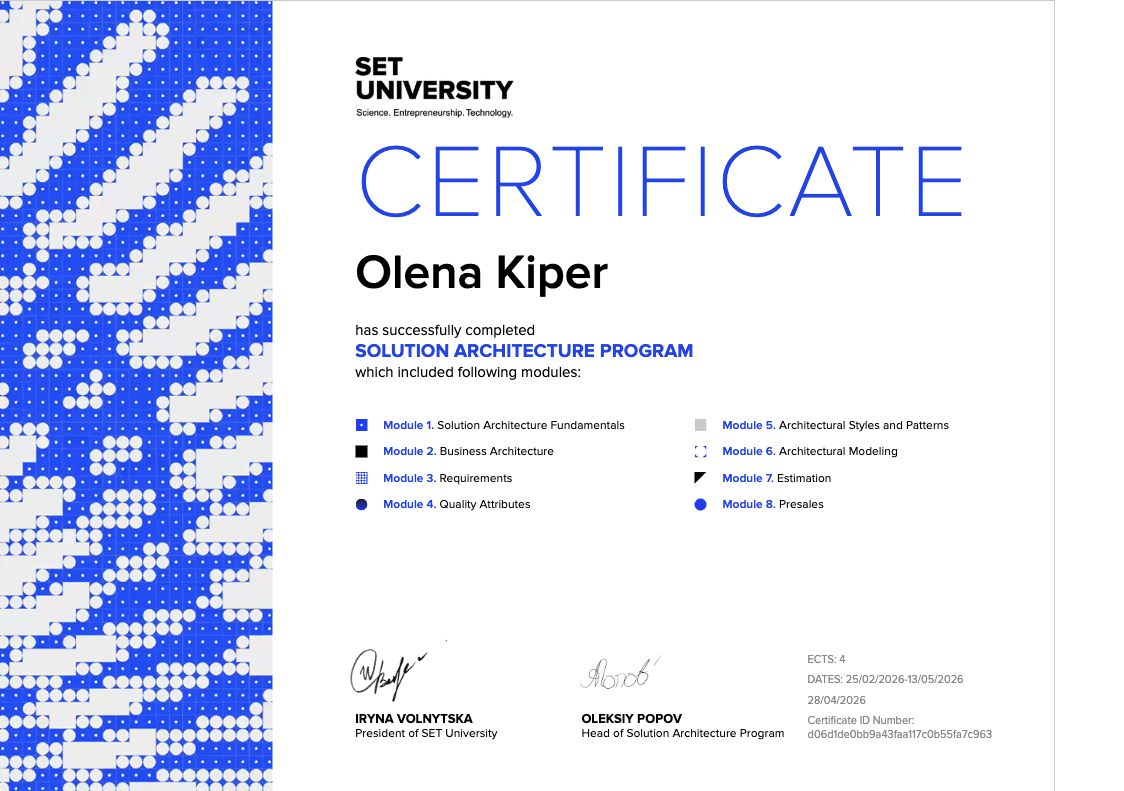
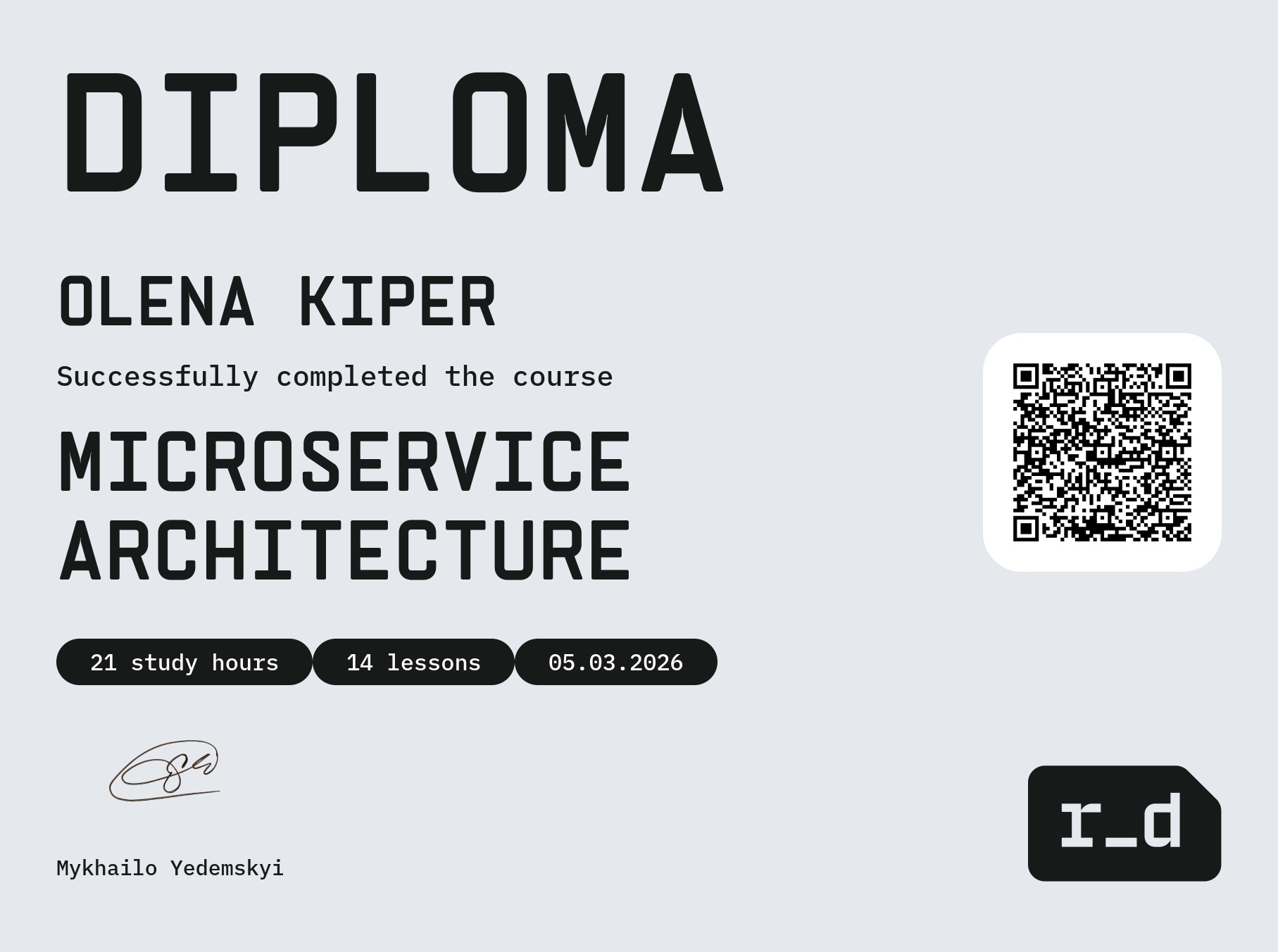
03 / LEARNING & CREDENTIALS
Selected programs from my professional profile.
04 / EDUCATION
Computer Science
Computer Software Engineering
Computer Software Engineering
CONTINUE THE CONVERSATION